Epoxy microcement
ONEPOX
High-resistance epoxy microcement designed to create continuous surfaces exposed to heavy traffic, moisture and demanding conditions.
View technical data sheetWithstands impact, abrasion and heavy traffic on demanding surfaces.
Suitable for bathrooms, kitchens, spas and other areas exposed to moisture.
Performs against aggressive agents and frequent cleaning processes.
Uniform, seamless surface that is easy to maintain.
Epoxy microcement
Epoxy resistance with a natural finish
ONEPOX is an epoxy-based microcement designed to provide a resistant, functional and aesthetic solution for demanding projects.
It combines the superior mechanical and chemical properties of epoxy resins with the natural, warm and minimalist finish of microcement, creating a unique coating in its category.
It is ideal for surfaces exposed to heavy traffic or extreme conditions thanks to its resistance to impact, abrasion and aggressive chemicals.
Its complete waterproofing makes it the perfect solution for wet areas such as bathrooms, kitchens, spas and outdoor areas, ensuring durability without compromising appearance.
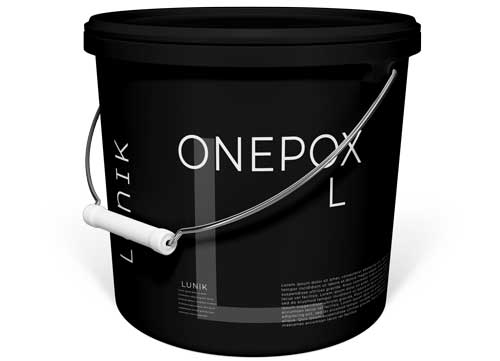
ONEPOX L
Coarse-grain epoxy microcement designed to provide maximum structural resistance and a more pronounced, natural textured finish.
- Packaging
- 15 kg
- Grain size
- 0,50 mm
- Density
- 1,35 g/cm³
- Consumption per coat
- 0,9 kg/m²
- Max. thickness per coat
- 1 mm
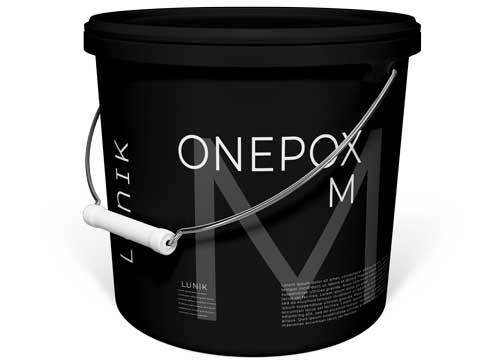
ONEPOX M
Medium-grain epoxy microcement, versatile and balanced, ideal for decorative and technical applications with a homogeneous and elegant finish.
- Packaging
- 15 kg
- Grain size
- 0,30 mm
- Density
- 1,25 g/cm³
- Consumption per coat
- 0,4 kg/m²
- Max. thickness per coat
- 0,3 mm
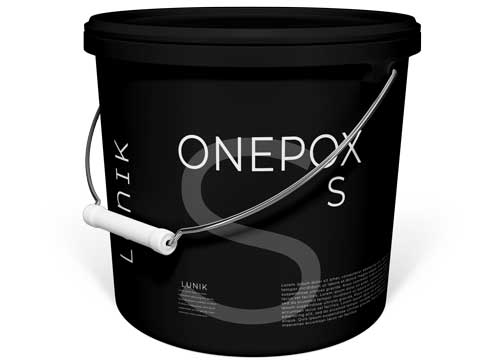
ONEPOX S
Fine-grain epoxy microcement, perfect for achieving smooth, uniform and easy-to-clean surfaces with a sophisticated, minimalist finish.
- Packaging
- 15 kg
- Grain size
- 0,10 mm
- Density
- 1,25 g/cm³
- Consumption per coat
- 0,3 kg/m²
- Max. thickness per coat
- 0,15 mm
ONEPOX application method
Select each stage to view the complete application process.
Surface preparation
The surface must be clean, dry and free from dust, grease, loose paint or any contaminant that could compromise adhesion of the epoxy microcement.
Any cracks, imperfections or irregularities must be repaired before continuing. Lightly sanding the surface is recommended to increase roughness and improve adhesion.
Sanding residue must be removed with a vacuum cleaner or damp cloth, allowing the surface to dry completely before applying the next step.
Primer application
Use PREPOX W as a primer to ensure optimal system adhesion. Apply an even coat with a roller or brush over the prepared surface.
It is important not to allow more than 24 hours between applying PREPOX W and the first coat of ONEPOX.
Application of ONEPOX Base
ONEPOX L should be applied directly with a flexible metal trowel, spreading it evenly across the entire surface.
Drying time varies between 6 and 12 hours depending on temperature and humidity. Once dry, sand with 40-grit abrasive paper to level the surface and remove imperfections.
If required by the surface, a second coat can be applied following the same procedure to ensure a completely uniform base.
Application of ONEPOX M or S
Use ONEPOX M or S depending on the desired finish to achieve an aesthetic and uniform surface. Spread with a flexible metal trowel, covering the entire surface.
Once dry, sand with 120-grit sandpaper to achieve a smooth and uniform surface.
Apply a second coat if necessary, sanding again once dry to ensure a perfect, silky and natural finish.
Final sealing and protection
Apply two coats of VARNISH W to protect the surface and ensure system durability.
Use VARNISH DSV if greater chemical or water resistance is required. Always respect drying times between coats.
Additional recommendations
Always carry out a preliminary test on a small area to verify product compatibility and final color.
Work under controlled conditions, at temperatures between 10 °C and 25 °C and moderate humidity levels.
Clean tools immediately after use to prevent the material from hardening on them.